

Starting with a broad view of what has been happening in the Warehousing’s sector, it’s clear that the last couple of years have brought many challenges. The UK economy grew by only around 1% in 2025, which chimed with reports from UK Warehousing Association 3PL members that their customers were being cautious about signing new deals.
Given the fragile economy, it wasn’t a surprise when we surveyed UKWA members in the middle of last year that operating costs came out as the largest concern. Number two on the list of member challenges was workforce recruitment and retention. These two overlap, as one of the major cost increases for sectors that rely on lots of people like ours came from National Insurance and minimum wage rises. Even with increasing automation, we estimate over 650,000 people work in the warehousing sector.

At the UKWA Conference in March, Kevin Mofid from Savills shared survey data suggesting that logistics businesses had been expecting business conditions to improve. This tallied with what we were hearing from UKWA members at the beginning of the year. Unfortunately, our members were not anticipating war in the Middle East, and the knock-on effects on fuel prices and shipping, among other things.
However, the conflict does not negate trends that have been happening in warehousing in the last 18-24 months, and in some cases it might even accelerate them.
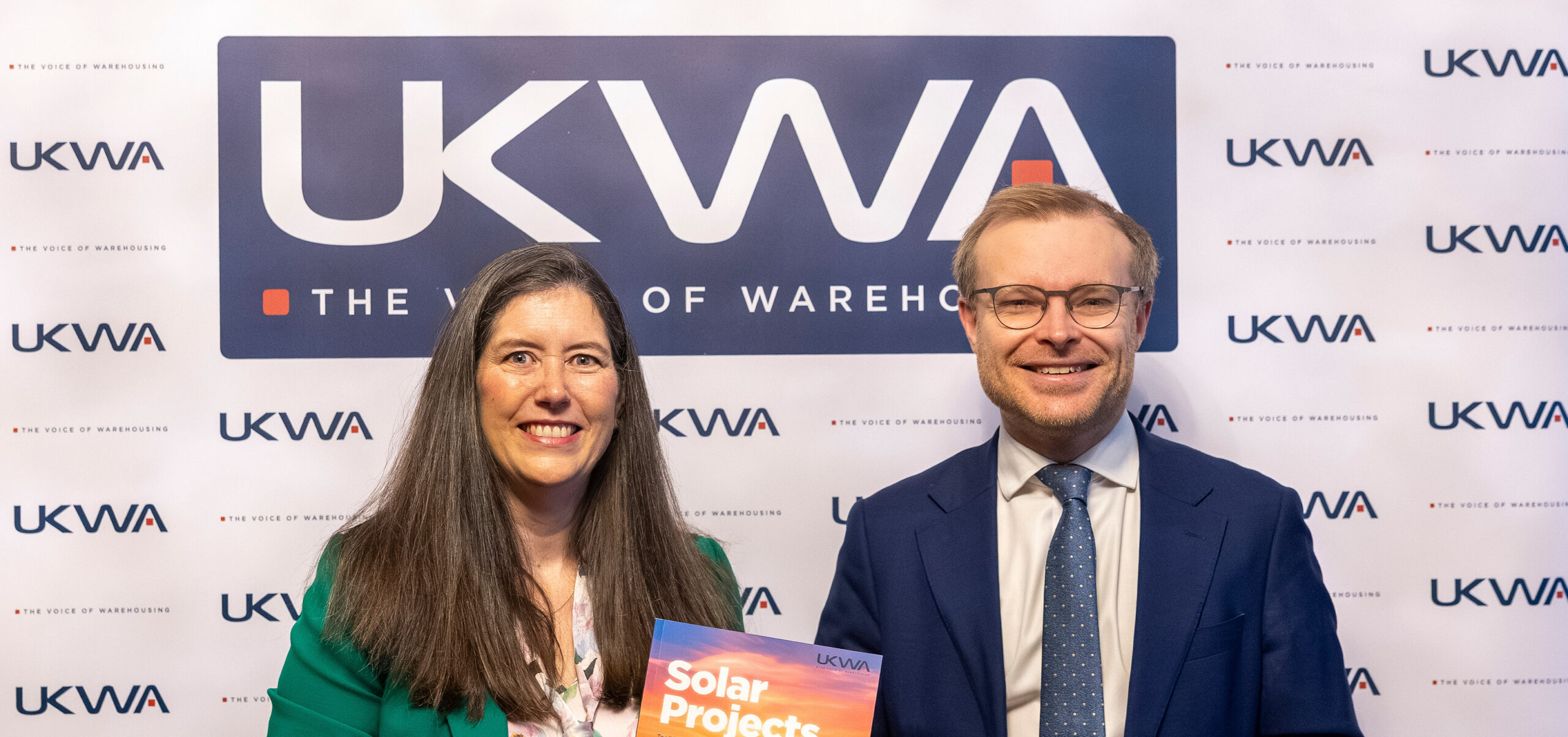
The UKWA has been campaigning for some time to make better use of the UK’s warehouse rooftops for solar energy generation. We have previously estimated that only around 5% of warehouses have solar panels, and that if we could manage to get them installed on just large facilities, it would double the UK’s total solar capacity.
Obviously, this would make the UK’s warehousing stock more sustainable, but for our members it’s really about their practical needs. Generating power from your rooftop can save a warehouse operator money, at a time when energy bills are already very high. For landlords, minimum energy efficiency regulations mean that they won’t be able to lease their warehouses in a few years’ time unless they hit certain EPC ratings. Installing solar PV can help them to do that.
A significant change announced recently in the Government’s Future Buildings Standard, is that new warehouses will be expected to have “solar PV panel coverage equivalent to 40% of the building’s foundation area”. This will accelerate the rollout of solar on newbuilds. In some cases, plans are being developed for logistics parks which are almost self-sufficient in energy through solar and battery storage.
These changes were already in progress, but the Government is now trying to push even faster to use solar and wind power to reduce the UK’s dependence on imported natural gas.
Adoption of technologies such as automation, robotics and AI has varied across our sector. The attention on how AI, in particular, can disrupt sectors has often focused on professional functions like software engineering or law, but warehousing has very different employment patterns and needs.
Another speaker at our conference, former Morrison’s executive Ross Eggleton, talked about how he had used digital twin technology to understand and make predictions about changes to the grocer’s distribution network. The options available to companies for network design are ever-increasing, and having data-driven assessments, that boards can trust, is vital.
The range of WMS options available to warehouse operators is broad, and they increasingly come with AI integrated as standard. There is also growing awareness, however, or cyber risks. The story of Knights of Old collapsing due to a cyber attack is well known in our sector, but there are more recent concerns linked to Iranian hackers. Managing risks related to technology is a constant challenge for warehousing leaders.
AI can help to optimise logistics networks, but this relies on being able to locate sites in the best spots. Another trend that we have seen in the market is that companies are reporting difficulties in finding space in the right locations. In Savills’ survey, this factor came out as almost as important as cost as a barrier to taking on new space.
There could be a number of reasons for this, but the UK’s restrictive planning system certainly plays a role. The Government’s new National Planning Policy Framework may help here. It pushes local planning authorities to give greater attention to the needs of warehousing and logistics, and to collaborate across authority boundaries. It will only help if planners at the local level take on board the changes, however.
The warehouse sector will have to be very adaptable over the coming years to deal with changes both within the market, and external forces. The reverse logistics market is anticipated to keep growing. While returns have been traditionally dominated by clothing, other facets are becoming important, such as handling used (and therefore possibly dangerous) lithium batteries. The electrification of fleets, while an opportunity to decarbonise transport, is still an open question for warehousing. Where are all of the EV charging points going to go? Meanwhile, our sector was having to handle higher costs from business rates, and new employment regulations, even before the Iran conflict injected more uncertainty.
On the other hand, change is always an opportunity. UK consumers are enthusiastic adopters of new ways of shopping, there are continuously new entrants to the retail sector, and the defence sector is on the cusp of major expansion. Warehousing leaders are used to changing rapidly to meet companies’ needs, and they’re ready for the challenges ahead.
UKWA (Edwin Morgan Policy & Communications Director
UKWA CEO appointed Chair of key regional logistics body
A leading figure in the UK logistics industry has been appointed to chair a key forum supporting jobs, skills and growth in Northamptonshire.
Clare Bottle, CEO of the UK Warehousing Association (UKWA), has been named Chair of the Northamptonshire Logistics Industry Forum. Hosted by the University of Northampton, the Forum brings together local businesses, educators and public sector partners to support one of the county’s most important industries.
Northamptonshire is at the heart of the UK’s logistics network, hosting major distribution centres that are essential to the national supply of consumer goods, food, medicines and much else. The Forum focuses on issues including skills development, innovation and sustainable growth, helping to ensure Northamptonshire remains a leading location for logistics in the UK.
Clare Bottle said:
“Logistics is fundamental to Northamptonshire’s economy and to daily life, but it often operates behind the scenes.
“I’m passionate about making sure the sector is better understood and that we create clear pathways into great careers for local people. The Forum is a brilliant opportunity to bring education and industry closer together and deliver real benefits for the county.”
Speaking on behalf of The University of Northampton, Cathy Smith Dean of Research and Knowledge Exchange, said:
“We are delighted to welcome Clare as Chair.
“Clare is widely recognised across the logistics and supply chain sector as a respected leader and advocate, with a strong national profile and a reputation for bringing people together to drive progress. Her leadership and experience will help us build on the Forum’s work and strengthen links between the University, businesses and the wider community.”
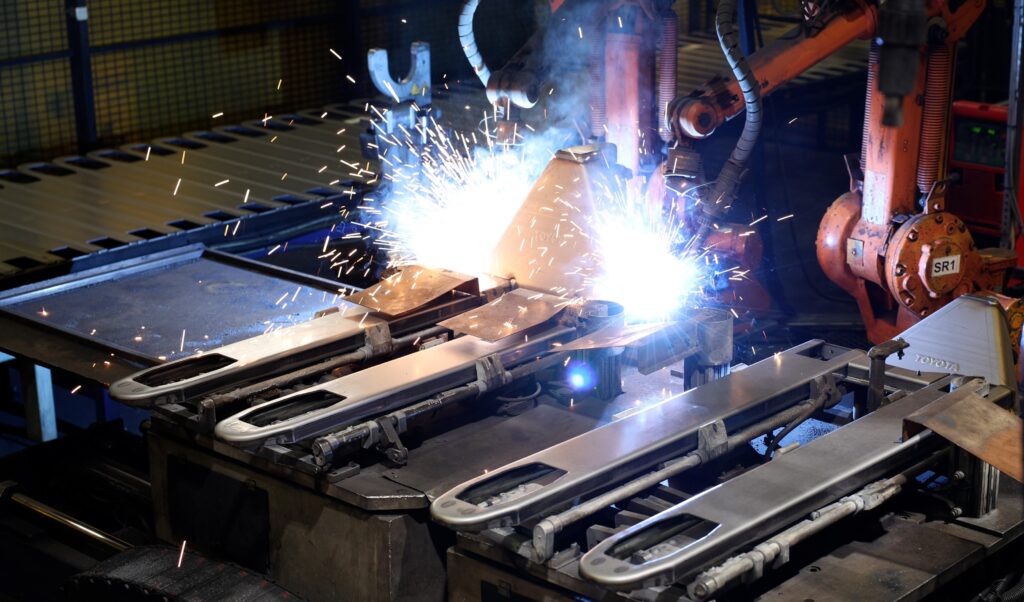
Toyota Material Handling Europe advances toward net zero with SSAB Zero™ steel
Toyota Material Handling Europe has reduced the carbon footprint of its iconic hand pallet truck Toyota Lifter LHM230 by 18% cradle-to-gate by switching to SSAB Zero™ steel in the forks and frames. The move is a key milestone toward the company’s ambition of net zero emissions across its entire value chain by fiscal year 2041.
At Toyota Material Handling Europe, forklifts and pallet trucks keep warehouses and logistics running around the clock. Steel is at the heart of those products, but conventional steelmaking is a major source of CO₂ emissions.
“This is the reason why collaborating with SSAB is so important – combining their knowledge in lower-carbon steels with our target to reduce emissions all through the value chain,” says Camilla Åkerman, Program Manager Fossil-Free Products, Toyota Material Handling Europe.
The collaboration began with Toyota Material Handling’s high-volume hand pallet truck, the Toyota Lifter LHM230. The forks and frames of this model are now made with SSAB Zero™, and the same steel is used in the forks of three Toyota BT Levio powered pallet trucks – the LWE130, LWE140 and LWE160.
“By using SSAB Zero™, we cut the emissions in the forks and frames in our hand pallet trucks by up to 75%, which accounts for 18% decarbonisation for the entire product, cradle-to-gate” says Per Fyrenius, Senior Vice President Corporate Development, Toyota Material Handling Europe.
The introduction of SSAB Zero™ required verification to ensure performance and production compatibility.
“The main challenge was verifying the material to ensure performance required a robust verification plan. It was a challenge for us, but the results were very positive,” says Camilla Åkerman.
For SSAB, the partnership is further proof that low-emission steel can seamlessly replace conventional grades without compromising quality.
“SSAB Zero™ is our decarbonised steel that meets the same high-quality standards as conventional steel. It delivers the same strength, durability, and reliability – ensuring that Toyota’s trucks perform in the most demanding environments,” says Matts Nilsson, VP and Head of Sales, SSAB Europe.
Toyota Material Handling Europe produces around 80,000 hand pallet trucks and 15,000 powered pallet trucks every year. The company sees the partnership with SSAB as a key enabler in its long-term decarbonisation roadmap.
“With SSAB Zero™, we are now achieving real, measurable carbon savings. We’re proud to be the first material handling manufacturer to use SSAB Zero™ decarbonised steel in serial production,” says Camilla Åkerman.
Encouraged by the results, Toyota Material Handling Europe is now exploring further ways to integrate low-CO₂ materials across its product portfolio. “Our partnership with Toyota Material Handling Europe is built on a shared commitment to innovation and climate action. It proves that industry leaders can really drive change when working together,” says Matts Nilsson, VP and Head of Sales, SSAB Europe.
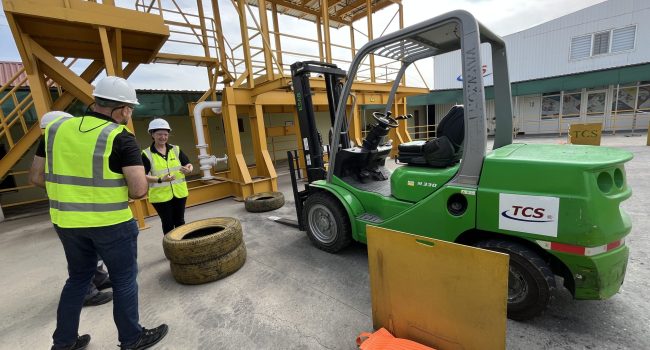
AITT urges recruiters to widen accreditation criteria
Accrediting body warns agencies that they might be limiting their potential recruitment pool
Recruitment ads for forklift operators often specify particular accrediting bodies, but that practice could be unnecessarily excluding capable, qualified candidates.
Many agencies still request operators only with accreditation from one or two bodies. This is despite the fact that all ABA members (AITT, ITSSAR, LANTRA, NPORS, and RTITB) follow the same Code of Practice, developed with support from the Health and Safety Executive.
By naming only one or two accrediting bodies, agencies risk dismissing a large number of skilled operators. Anyone trained under an ABA member’ accredited training meets exactly the same benchmark. Changing job adverts to say ‘accredited training’ widens the talent pool without lowering standards.
The whole point of the ABA is consistency. If an operator holds ABA-recognised training, they are competent to the same level. Recruiters who reflect that in their adverts will find it easier to fill vacancies in a competitive hiring market.
Recruitment agencies are encouraged to review legacy templates and ensure their job descriptions reflect the full range of ABA-recognised accreditations.
For guidance on appropriate forklift-training terminology, agencies can contact AITT or the ABA.
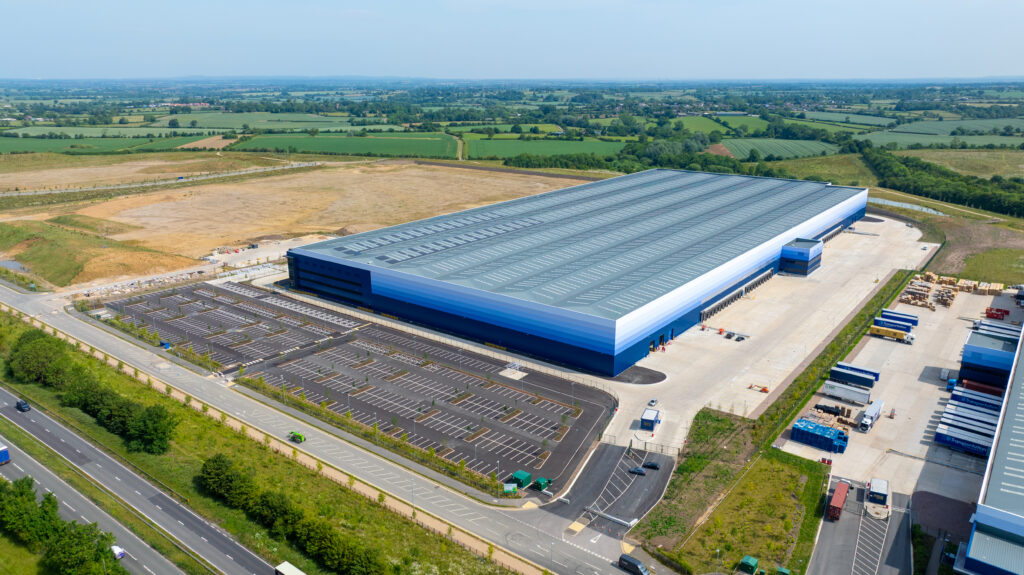
Bleckmann opens another mega distribution centre in UK expanding total operational footprint in the UK to 420.000 square metres
Bleckmann, specialist in supply chain management for fashion and lifestyle brands, is expanding its UK footprint with the opening of a new mega distribution centre (DC) in Lutterworth. This new opening adds to its already extensive operational footprint in this highly sought-after market. The new mega-DC, located in the heart of the UK’s logistics ‘golden triangle’ in the Midlands region, is ideally situated to support clients in reducing lead times and improving service quality. The multi-client space, which measures 761,932 square feet (70,786 square metres), will be fully operational as of July 2026.
The DC is one of the largest in Bleckmann’s UK portfolio, which includes additional sites in Lutterworth, alongside locations in Swindon, Bury St Edmunds, Burton-on-Trent, Crick and Corby. The company supports a wide range of clients in the UK, including fashion and lifestyle brands from all over the world.
In particular, the go-live marks a significant milestone for Bleckmann’s growing lifestyle logistics offering. Able to accommodate categories such as beauty, haircare, sports and accessories, alongside fashion apparel, the new warehouse will allow Bleckmann to provide even more specialist supply chain solutions tailored to the distinct operational needs of its fashion and lifestyle clients – ensuring flexibility and scalability while prioritising the customer experience. The expansion of its warehousing footprint will therefore allow it to build on its successful track record of partnerships with leading brands across these industries.
Both UK-based clients and brands from across the EU and beyond are well-represented across its UK network, attracted by the strategic flexibility it offers. One example is the added complexity of cross-border returns for EU-based brands, which can be eliminated by splitting stock between the UK and a European logistics hub such as the Benelux region.
“More than a service provider, our clients see us as a catalyst for the expansion of their UK operations”, explained Tony Brito, Cluster Director for Bleckmann in the UK. “From customs management to returns, we work to remove obstacles to growth, so they have better operational efficiency and more room to grow.”
The continued expansion of Bleckmann’s warehousing footprint in the UK and elsewhere reflects the growing demand for specialist logistics services in the fashion and lifestyle industry. From enterprise-level global brands to emerging niche players, the customer experience continues to play an essential role in maintaining loyalty and growing revenue. Combining specialised expertise in fashion and lifestyle logistics with streamlined end-to-end distribution and tailored value-added services, Bleckmann allows brands to consistently deliver on their promises. “We look forward to providing even more brands with the targeted and scalable support they need to pursue their growth objectives”, added Tony Brito. “This new mega DC reflects our ambitions to further develop our specialised offering.”
Transport & Logistics Magazine – Driving The Industry Forward