

Exceptionally future-proof: Bidfood purchases ECOOLTEC transport refrigeration units
- Foodservice provider Bidfood adds two trucks with multi-temperature bodies and ECOOLTEC transport refrigeration units to its fleet
- Faye Reeve, Head of Procurement at Bidcorp UK: “Using natural refrigerants saves up to 25 tonnes of CO2 equivalent per truck.”
- Natural refrigerants are not affected by the phase-down of the F-Gas Regulation and ensure long-term operational safety of refrigeration systems
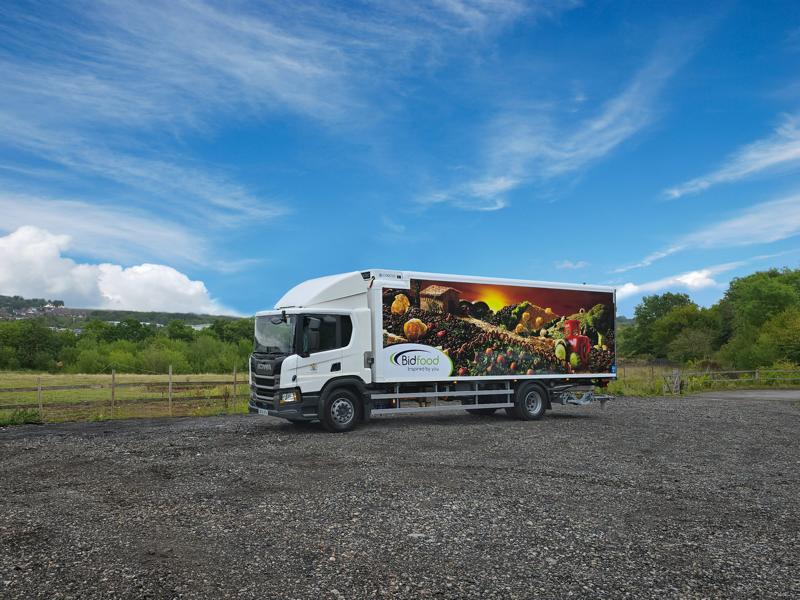
Bidfood, a Bidcorp UK business, has been using electrically driven transport refrigeration systems for many years. Now, the British foodservice provider has purchased its first two 18-tonne trucks with transport refrigeration systems from ECOOLTEC. The aim is to accelerate the decarbonisation of its refrigerated vehicle fleet and further reduce the carbon footprint of its transport operations. Faye Reeve, Head of Procurement at Bidcorp UK, expects savings of up to 25 tonnes of CO2 equivalent per vehicle simply by initially filling them with natural refrigerants.
“Our fleet has run electric driven transport refrigeration units for over 15 years, but the ECOOLTEC product offered an opportunity to go further and address the use of refrigerants. ECOOLTEC utilises wholly natural refrigerants, with virtually zero global warming potential. This is really attractive to us at Bidfood, particularly as we focus more on decarbonising our fleet and continuing our mission to be a positive force for change”, explains Faye Reeve, Head of Procurement at Bidfood’s parent company Bidcorp UK.
The fleet of the British food wholesaler, which operates nationwide, comprises a total of 1,350 refrigerated vehicles and now also includes two Scania P250s with multi-temp bodies from Gray & Adams and the ECOOLTEC TM182 transport refrigeration system. The 18-tonne trucks are used for regional distribution between the Bidfood depot in Nottingham and regional customers, including schools, hospitals, nursing homes and restaurants. According to the Head of Procurement, the vehicles have already proven themselves in everyday use over several weeks. “I am pleased to say, the systems are working well to date, and the team in our Nottingham depot has been positive”, she reports.
Long truck usage phase requires future-proof refrigeration unit
The two trucks will significantly optimise the carbon footprint of refrigerated transport. “We calculate to remove 19 to 25 tonnes of CO2 equivalent from the cold chain on the initial fill of refrigerant – depending on which competitor’s product we compare the ECOOLTEC systems with. So, for both vehicles, this will therefore mean a total of between 38 and 50 tonnes of CO2 equivalent”, says Faye Reeve.
Bidfood keeps its refrigerated vehicles for around ten years. “Because of this long service life, we place a huge emphasis on low total cost of ownership. We take numerous factors into account, such as the energy efficiency of the system and maintenance costs. A reliable availability of spare parts is also important”, explains the Head of Procurement. According to Faye Reeve, the consequences of the stricter F-gas Regulation are playing an increasingly decisive role in purchasing decisions. These have a major impact on the price and availability of refrigerants and thus on the long-term operational reliability of transport refrigeration systems.
F-Gas Regulation limits availability of synthetic refrigerants
Since F-gases, especially hydrofluorocarbons (HFCs), contribute significantly to greenhouse gas emissions in Europe, the European Parliament has enacted the
so-called F-Gas Regulation (EU) 2024/ 573, which initially phases down the use of synthetic refrigerants and will even ban them completely by 2050 (phase-out). The UK is expected to introduce similar regulations. The Department for Environment,
Food and Rural Affairs (DEFRA) has just presented a proposal that provides a phase-down of F-gases by 89.7 per cent by 2030 and 98.6 per cent by 2048, as well as a phase-out in 2050. At the same time, F-gases fall under the rules of the REACH Regulation (EC) 1907/2006, according to which PFAS, or forever chemicals, which also include synthetic refrigerants, may be affected by a future ban as they pose a risk to human health. The REACH Regulation could affect the availability of refrigerants from 2026 onwards.
The phase-down under the F-Gas Regulation already jeopardises the operational safety of conventional transport refrigeration systems if no refrigerants are available for use during maintenance. In contrast, no quantity restrictions apply to natural refrigerants due to their negligible impact on the climate. They also offer a competitive price compared to synthetic versions.
ECOOLTEC technology enables F-gas-free supply chain
ECOOLTEC has developed a revolutionary generation of transport refrigeration machines for use on commercial vehicles. The refrigeration systems can be operated electrically from the truck engine via their in-house high-performance alternator, a battery, or a separate power alternator and therefore do not require an integrated diesel engine. Unlike widely used diesel refrigeration machines, the ECOOLTEC unit produces neither local pollutant nor CO2 emissions in battery operation, and up to 98 per cent fewer emissions via the alternator drive.
The technological highlight of the system is the use of sustainable refrigerants. Instead of the fluorinated refrigerants (hydrofluorocarbons) R452A and R410A, which are predominantly used in transport refrigeration and have GWP (Global
Warming Potential) values of approximately 2,000; ECOOLTEC relies on natural refrigerants with GWP values of 1 and 0 respectively. In addition, unlike
conventionally designed machines, the ECOOLTEC system features patented hermetic refrigerant circuits that are outstandingly efficient at preventing leaks, despite the demanding operating conditions in road freight transport. This also has a very positive effect on reducing operating costs.
60 to 80 per cent less energy consumption than conventional systems
Hydrocarbons are also characterised by the high energy efficiency of the refrigeration process, meaning that ECOOLTEC refrigeration systems designed for multi-temp operations have an enormous refrigeration capacity in terms of size and weight to meet the extreme temperature safety demands in food distribution, even in hot countries such as Spain. As a result, the ECOOLTEC refrigeration system requires 60 to 80 per cent less energy than a conventional system for the same cooling capacity powered by a stand-alone diesel engine.
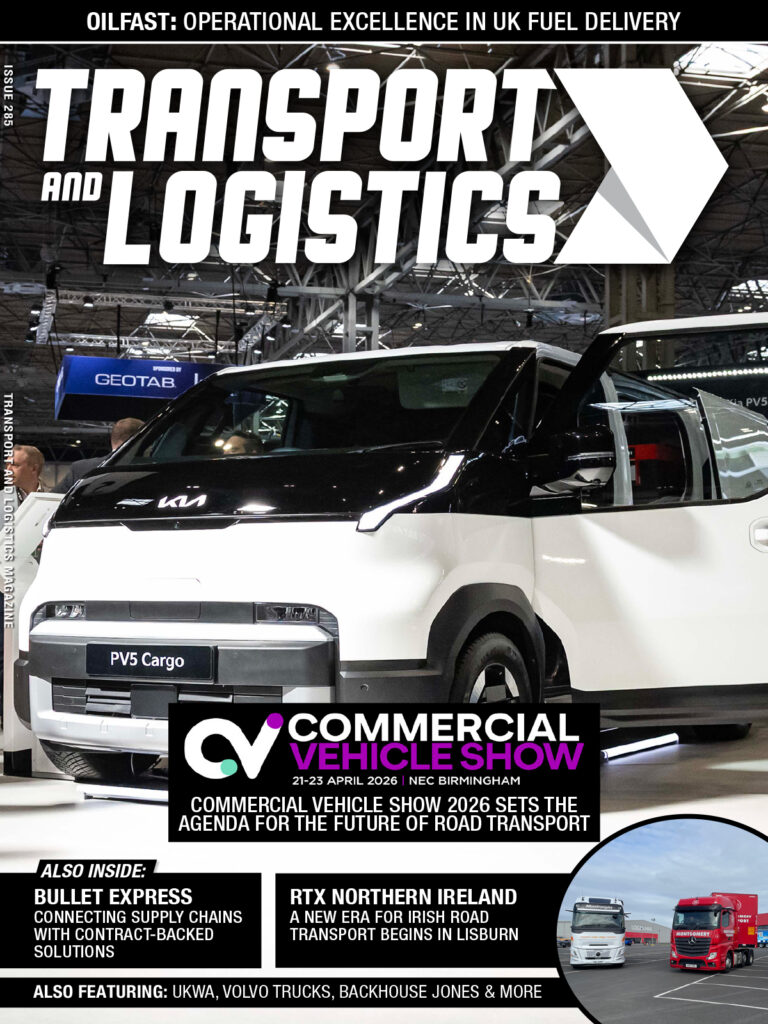
Transport & Logistics Magazine – Driving The Industry Forward