

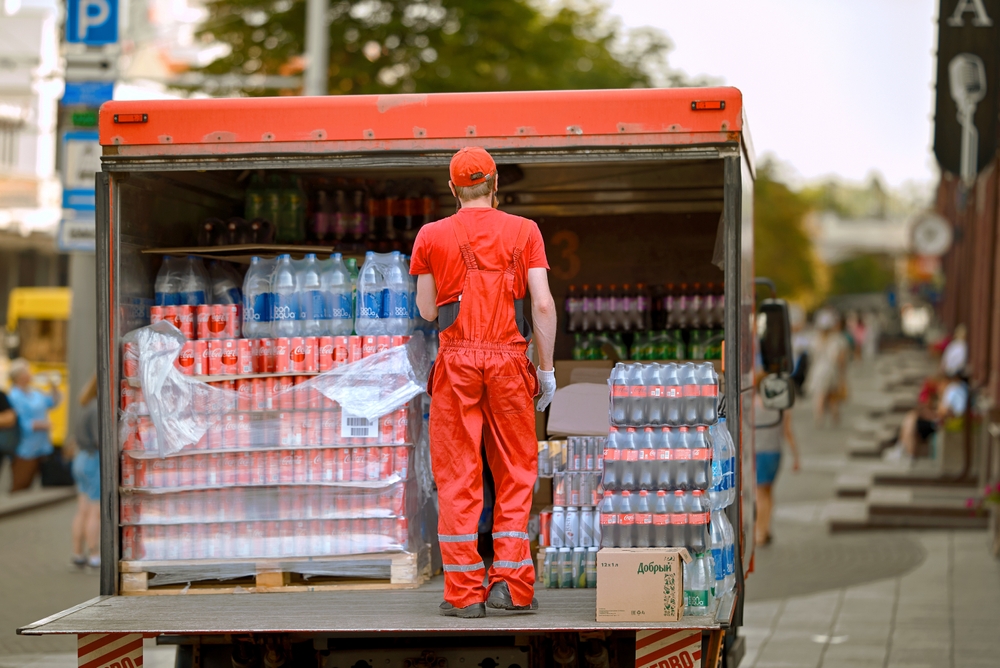
Every year, the Driver and Vehicle Standards Agency (DVSA) issues 2,000 prohibitions for insecure loads, highlighting the serious risks that poorly secured goods pose to drivers, workers and other road users. Operators referred to court may face unlimited fines, while responsibility for any infringement extends beyond the driver to everyone involved in loading and transporting goods. To help the sector manage these risks, business group Logistics UK is today (17 September) publishing a major update to its brewing and drinks load-security best-practice guide, bringing regulators and industry together to improve safety from brewery to bar.
Launched at Logistics UK’s Transport Manager conference in Yeovil, Load security – a Logistics UK brewing and drinks industry best practice guide, translates load-security requirements into practical guidance for breweries, drinks manufacturers, logistics operators, loaders and drivers. The best-practice guide is produced in conjunction with the DVSA, the Health and Safety Executive and sector specific Logistics UK members.
“This new guidance brings together regulatory expertise and practical industry experience to help businesses manage the distinctive risks associated with securing loads in this specific sector of road transport,” says Logistics UK’s Chief Executive Ben Fletcher. “By giving clear, practical advice for every stage of the process, we can raise standards across the sector, make it more efficient and help protect all road users.”
The guidance outlines how the drinks and brewing sector faces several challenges for securing and the safe delivery of loads: loads often contain products of different shapes, weights and heights, while multidrop routes, that are common in the sector, create “diminishing loads” as deliveries are made and weight distribution changes. In addition, many pub and retail deliveries happen at kerbside, with limited handling facilities and essential gas cylinders and beer-line cleaner products can also introduce dangerous-goods considerations.
Providing practical advice explaining how these challenges can be addressed, the best-practice guide also highlights the participants in the transport system chain who each have their part to play in effective load security:
- Consignor – the entity sending the load that often provides the product and loads the vehicle;
- Operator – whose responsibilities usually relate to the vehicle and driver;
- Driver – who has ultimate responsibility for the safety of the vehicle on the road;
- Consignee – the entity receiving the delivery and has responsibility for safe unloading.
“Responsibility cannot and must not simply be passed down to the driver,” continues Fletcher. “Moving brewing and drinks products safely is a shared responsibility from the moment goods are packed and loaded onto a vehicle to when the final delivery is made.
“While our new guide’s core principle is deliberately simple – loads must be positioned in a safe location on the vehicle and stay put throughout the journey – the reality is more complex. Stakeholders across the distribution chain need industry specific knowledge and practical systems to ensure goods are transported and handled in a compliant and safe way. The updated guidance is a significant piece of work that will help achieve this.”
Copies of the best-practice guide can be downloaded free of charge here: Load security – a Logistics UK brewing and drinks industry best practice guide
Logistics UK is one of the UK’s biggest business groups, representing logistics businesses which are vital to keeping the UK trading, and more than seven million people directly employed in the making, selling and moving of goods. With decarbonisation, new technology and other disruptive forces driving change in the way goods move across borders and through the supply chain, logistics has never been more important to UK plc. Logistics UK supports, shapes and stands up for safe and efficient logistics, and is the only business group which represents the whole industry, with members from the road, rail, water and air industries, as well as the buyers of freight services such as retailers and manufacturers whose businesses depend on the efficient movement of goods.
Transport & Logistics Magazine – Driving The Industry Forward