

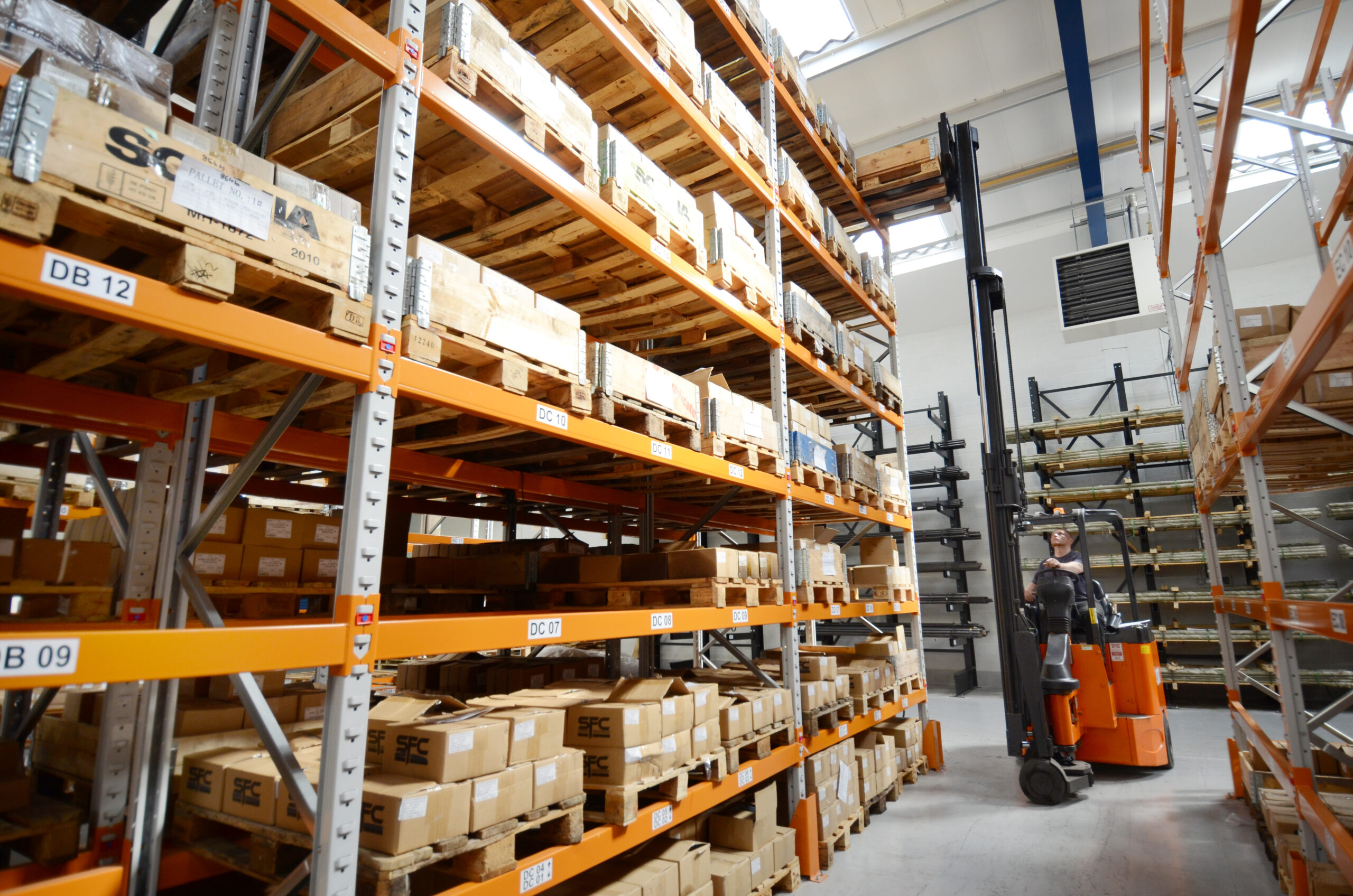
Racking Regulations Explained – A Warehouse Owner’s Guide : Warehouses are physically demanding environments, with vehicles and people moving constantly through and around racking.
Understanding the guidance that governs that racking is not optional homework. It’s central to keeping people safe and keeping your business compliant.
Health & safety in your warehouse starts with you
Warehouse operations sit within a wide framework of health and safety legislation.
The Health and Safety at Work Act 1974 sets the underlying duty on employers to protect their workforce. The Provision and Use of Work Equipment Regulations (PUWER) 1998 cover the equipment used and maintained on site, while the Management of Health and Safety at Work Regulations 1999 require employers to assess and control risk.
Racking is work equipment. It is used by employees. It presents a risk if poorly designed, installed or maintained. Any warehouse owner reviewing their obligations should treat racking as part of that wider legal picture, not as a separate concern.
HSG76 and SEMA codes explained
Sitting alongside this general legislation is guidance written specifically for storage equipment. HSG76, Warehousing and Storage: A Guide to Health and Safety, is published by the Health and Safety Executive and covers manual and mechanical handling, site transport and working at height. SEMA Codes set the standards for how racking should be designed, installed and maintained.
Neither HSG76 nor SEMA Codes are legal requirements in themselves. However, they are the benchmark the HSE uses to judge whether a business has met its statutory duties. If an incident occurs, an inspector will check whether a warehouse followed this guidance. A business that has not will find it far harder to demonstrate it did what was reasonably practicable to keep its workforce safe.
Getting it wrong will cost you
The financial risk of ignoring this guidance is quite significant. HSE fines for health and safety failings have reached seven figures in recent years, and that figure is set only to climb.
But more importantly, a serious racking failure can halt operations, damage stock and, most importantly, cause injury. Reputational damage among customers and insurers tends to follow. The guidance exists because racking collapses are preventable, and the cost of prevention is far lower than the cost of failure.
Applying the guidance across racking’s lifespan
Racking safety is not a single decision. It needs attention at every stage of its life.
- Design: Racking must be engineered for its intended load and layout. Suppliers should design to SEMA Design Codes or the equivalent European standard, EN 15512, which set out how loads should be calculated and what safety factors apply.
- Installation: HSG76 is clear that racking should be installed on level, load-bearing floors by competent people, following the manufacturer’s instructions. To check your installer can meet these requirements, check they hold a SEIRS card.
- Operation: Someone on site should be appointed as the Person Responsible for Racking Safety (PRRS) who will conduct regular Visual Inspections ensure load notices are displayed and confirm that maximum capacities are never exceeded.
- Inspection: At least once a year, an Expert Inspection must be carried out by a technically competent person such as a SEMA Approved Racking Inspector (SARI).
How to get it right
Racking regulation can feel like a maze of documents and acronyms, but really, the principle is straightforward.
Design it properly, install it properly, check it regularly and inspect it formally.
Warehouse owners who follow this approach, using SEMA members and SEMA-trained specialists, put themselves in the strongest possible position to meet their obligations and protect their workforce.
Transport & Logistics Magazine – Driving The Industry Forward