


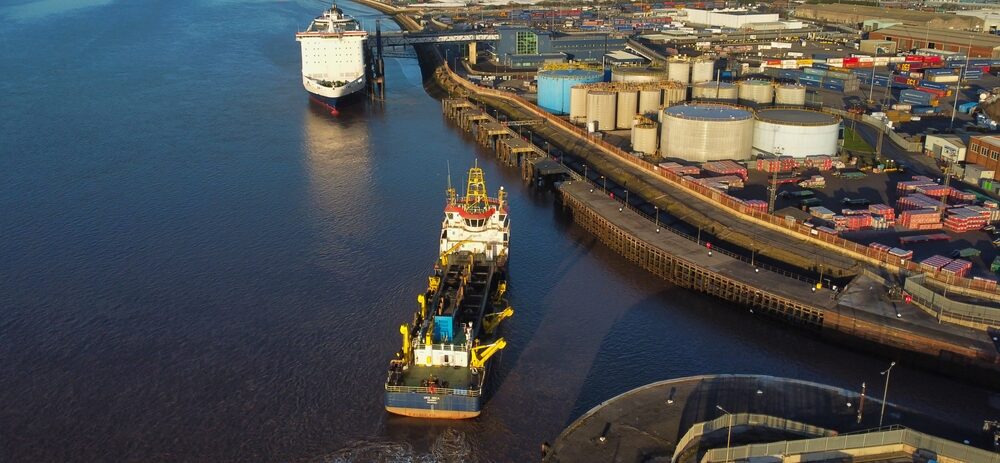
Landfill Tax Reforms. Andy Burnham’s incoming Treasury team has been warned to ditch a new tax on cleaning up waterways which campaigners say will cost thousands of port-based jobs and hinder the decontamination of rivers.
In a joint statement sent to Burnham’s number 10 transition team, the British Ports Association and Canal & River Trust have warned:
“We, the undersigned, note that Sir Keir Starmer’s ministers have outlined clauses for the introduction of a damaging new tax on cleaning up our waterways, including ports, rivers and canals, as part of ‘Legislation Day’. This is despite stark warnings across British industry – ranging from Energy from Waste plants to dredging contractors – that this unnecessary change will badly hurt the economy, environment and confidence of investors in the recycling sector.
“Millions of pounds will be added to the cost of decontaminating our waterways for safe use. Green projects around ports will be rendered financially unviable, preventing the creation of thousands of jobs in areas like the North-east. Canal dredging will be unaffordable unless schemes are delayed, resulting in lingering contamination. Moreover, the market cannot cope with the pace of the change, with the tax enforced little more than months from now.
“Andy Burnham and his new Treasury team must review and then scrap this illogical, dangerous tax as a matter of urgency.”
The statement was in response to Legislation Day today, when the Treasury published proposed clauses for the next year’s Finance Bill. The announcement confirmed exchequer secretary Dan Tomlinson will be pressing ahead with a tax that several port operators, waterways engineers, recycling firms and Energy from Waste plants have argued is impractical and will have harmful effects on both the environment and the economy.
This statement is supported by:
- Canal & River Trust – the UK’s largest canal charity, looking after 2,000 miles of canals and rivers across England and Wales
- Ebsford Environmental – river restoration and flood management group
- Land & Water – the UK’s largest inland dredging and environmental marine contractor
- Melton Renewable Energy – one of the leading generators of renewable energy in the UK, and a key waste management provider in agriculture and landfill gas
- Coventry & Solihull Waste Disposal Company – independent waste management company
- Augean – operates 22 sites across the UK supporting the circular economy to critical sectors
The proposed reform
The reform has been published here: Landfill Tax: removal of exemption for stabilisers added to dredgings when sent to landfill – GOV.UK
A summary is below:
- Dredged materials from ports, rivers and canals contain contaminated materials
- To remove this waste, the dredgings need to be dehydrated to make sure they are safe for disposal – there is rarely, if ever, sufficient space or a suitable environment for this to occur naturally near the site
- Hazardous ash residue – a stabiliser – that is a byproduct of creating renewable power at Energy from Waste and Biomass plants, is used to treat the dredgings
- Used together, contaminated materials and hazardous ash are neutralised, meaning they can be safely stored in specially engineered facilities that are landfill in name but far more secure and sophisticated than a typical site
- The process is currently exempt from landfill tax, acknowledging that this is a necessary treatment for hazardous and contaminated waste that removes environmental risk
- However, the Government has announced the removal of the exemption from landfill tax for stabilisers used in dredgings from 1 April 2027
- This was confirmed today alongside a raft of other new tax measures on Legislation Day
- This was despite strong opposition to the proposal, as acknowledged by the response – for example:
- Respondents said that dredging operations may become unviable if taxes were charged on stabiliser material or might result in virgin aggregates being used as a stabiliser
- In terms of impact on dredging activity, just over half of respondents said the proposal would reduce the amount of dredging carried out by navigation and port authorities due to increased costs and uncertainty about where that material could be disposed of
- Any removal of the exemption for stabilisers will require secondary legislation, which would have to be introduced before 1 April 2027
- The tax take for the Exchequer has been estimated at just £25m a year under recent annual tonnage rates
- Industry would have to spend tens of millions of pounds on alternative methods of treating dredgings for planned projects, many of which would then be delayed or rendered unaffordable
Transport & Logistics Magazine – Driving The Industry Forward