


Selecting the Ideal Packaging Architecture for High-Growth Industrial Markets
Industrial packaging is moving beyond generic, off-the-shelf solutions. Companies now prioritize integrated architectures that combine material performance, machine efficiency and digital traceability. Choosing the right medical packaging equipment, pharmaceutical packaging machines, or sterile packaging systems in conjunction with advanced machinery and sustainable materials ensures products are protected, processes are efficient and operations remain adaptable across high-growth industrial markets.
In This Article:
- From Off-the-Shelf to Integrated Solutions
- Balancing Sterility and Sustainable Efficiency in Medical Products
- High-End Electronics Protection Through Ultra-Clean Industrial Design
- Food-Tech Packaging for Extended Freshness
- Digital Product Passports for Traceability
- Leading Companies in Packaging Solutions
- Comparing Leading Packaging Solutions Providers
- How to Choose the Right Packaging Solution
From Off-the-Shelf to Integrated Solutions
Manufacturers and suppliers are increasingly prioritizing integrated packaging architectures designed to meet sustainability mandates, including extended producer responsibility and to navigate global supply chain volatility. Modern packaging is no longer evaluated solely on cost and shelf appeal. It must perform across multiple dimensions — material efficiency, machine compatibility and digital traceability.
Companies that master these three pillars gain a strategic advantage in high-growth industrial sectors:
- Material performance: Packaging must maintain structural integrity, protect contents and align with sustainability goals.
- Machine compatibility: Equipment must handle materials with precision and flexibility, supporting multiple product formats without slowing production.
- Digital traceability: Smart packaging systems provide real-time insights into supply chains and regulatory compliance, including product-specific digital records.
Balancing Sterility and Sustainable Efficiency in Medical Products
Medical products require packaging that maintains a fully sterile barrier while supporting the industry shift toward plastic-free or mono-material alternatives such as mono-polyethylene pouches. The best equipment for achieving this combines precision-driven horizontal form-fill-seal and thermoforming systems, which provide hermetic sealing for surgical kits and diagnostic tools while allowing rapid changeovers for different device sizes. Modern medical packaging also integrates AI-powered vision inspection to detect microscopic seal defects or label misalignments, ensuring consistent quality and regulatory compliance.
High-End Electronics Protection Through Ultra-Clean Industrial Design
High-end electronics require packaging that protects sensitive components while supporting clean and sustainable operations. Materials such as pure steel finishes and molded fiber inserts have replaced traditional expanded polystyrene foam, providing impact protection with a lower environmental footprint. Robotics-assisted case packing further enhances safety by preventing electrostatic discharge and improving throughput, while integrated sensors and vision systems ensure precise handling of fragile, high-value components.
Food-Tech Packaging for Extended Freshness
Food technology packaging focuses on extending freshness and minimizing waste. High-barrier papers and mono-polymers replicate the performance of multi-layer laminates while remaining fully recyclable in a single stream. Vacuum and modified atmosphere packaging machines preserve product quality by controlling oxygen and moisture levels, reducing reliance on chemical preservatives and supporting sustainability initiatives.
Digital Product Passports for Traceability
Digital product passports are becoming essential across industries to ensure traceability and compliance. Incorporating 2D barcodes, QR codes or near field communication (NFC) tags enables monitoring from production to end use.
These smart packaging systems improve regulatory transparency, support supply chain oversight, and create a direct digital link between brands and consumers. They also enable real-time verification of authenticity, reduce counterfeiting, and provide valuable data for sustainability reporting and inventory optimization.
Leading Companies in Packaging Solutions
Below are the top brands offering innovative and reliable packaging solutions across the medical, electronics and food industries, helping businesses meet efficiency, sustainability and regulatory goals.
Best for Medical Products: Plexpack
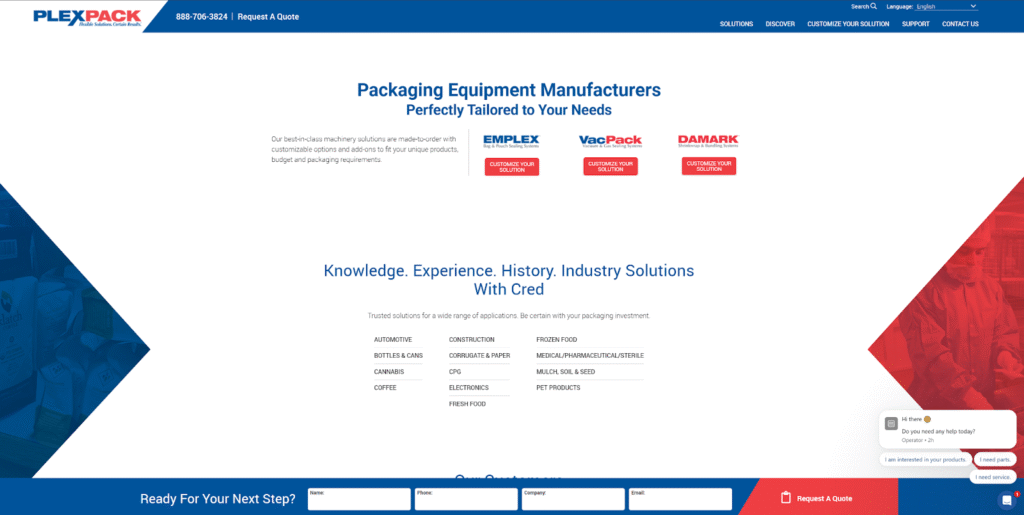
Plexpack delivers flexible, made-to-order packaging machinery for medical, food, electronics and industrial applications, combining modular design with customizable solutions for bagging, sealing, shrinkwrapping and vacuum systems. With a global service network and expertise across industries, it provides reliable, high-quality machinery that meets regulatory, operational and sustainability requirements.
Here are its key features:
- Supports sterile and regulated packaging processes
- Flexible integration with existing production lines
- Offers continuous band, impulse and vacuum/gas flush sealing options
- Specialized shrinkwrapping and bundling systems for varied product formats
- Modular systems allow easy upgrades and add-ons for evolving needs
Best for High-End Electronics: Coesia
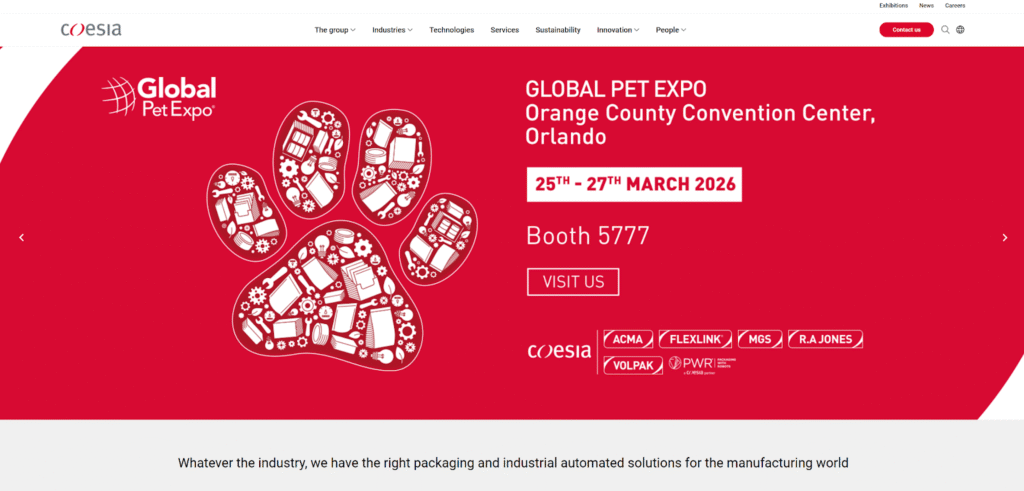
Coesia delivers advanced industrial and packaging solutions for high-end electronics, aerospace, automotive and luxury goods, combining automation, precision machinery and innovative process technologies. Operating globally with a focus on sustainability, efficiency and technological advancement, it provides high-performance systems that optimize production, reduce environmental impact, and support long-term value creation for clients and communities.
Its core strengths include:
- Customizable automation and robotics for delicate electronics handling
- Advanced process solutions for high-precision manufacturing
- Industrial transmissions and machinery for optimized workflow efficiency
- Strong corporate sustainability practices integrated into operations
Best for Food-Tech Applications: Tetra Pak
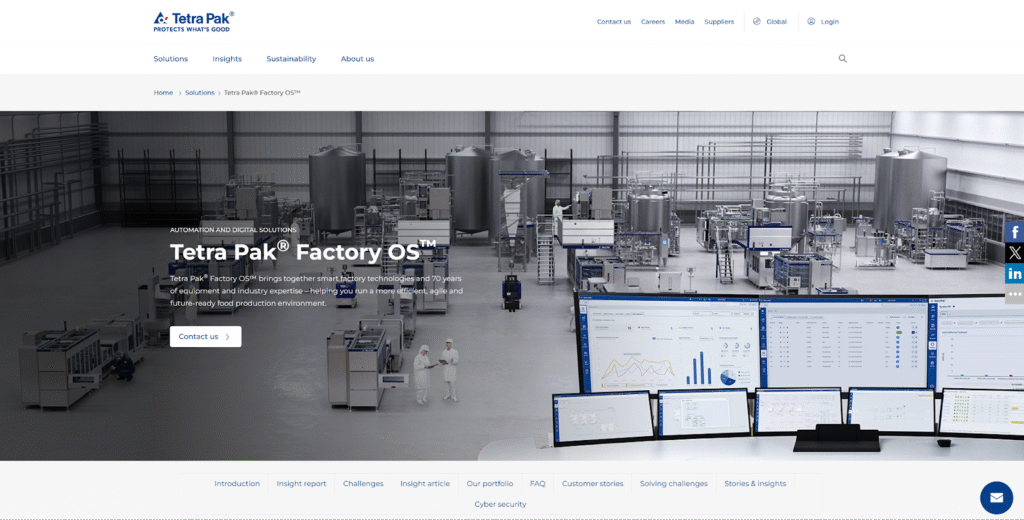
Operating in over 160 countries, Tetra Pak provides advanced food production and packaging solutions that protect and deliver safe, sustainable products globally. It combines innovative filling, processing and packaging technologies with a focus on efficiency, food safety and environmental responsibility, ensuring reliable, high-performance systems that meet the needs of food producers, brands and consumers worldwide.
Below are some of its notable capabilities:
- End-to-end support from processing to packaging
- High-speed filling and packaging systems for large-scale production
- Food safety compliance and traceability built into all systems
- Focused on reducing waste and maximizing energy efficiency
- Customer innovation and R&D centers to tailor solutions to local needs
Comparing Leading Packaging Solutions Providers
Selecting the right packaging partner requires understanding each company’s strengths, capabilities and focus areas. The table below highlights key features and specializations of Plexpack, Coesia and Tetra Pak, helping decision-makers in manufacturing, supply chain and operations identify the best fit for their industrial packaging needs.
| Best For | Key Capabilities | Global Reach | Industry Focus | |
| Plexpack | Medical Products | Flexible, made-to-order machinery for bagging, sealing nad shrinkwrapping, and vacuum systems with a modular design that supports sterile and regulated processes | Extensive service network worldwide | Medical, food, electronics, industrial |
| Coesia | High-End Electronics | Advanced automation and robotics combined with high-precision process solutions, industrial transmissions and operations focused on sustainability | Global operations with 34 countries | Electronics, aerospace, automotive, luxury goods, pharma |
| Tetra Pak | Food-Tech Applications | End-to-end food processing and packaging systems with high-speed filling, built-in food safety compliance, and dedicated R&D and innovation centers | Over 160 countries | Food and beverage production, processing and packaging |
How to Choose the Right Packaging Solution
Choosing the right packaging solution is critical for protecting products, ensuring compliance and supporting sustainability goals. The process involves evaluating materials, equipment and digital capabilities to match product and operational needs. Consider the following steps:
- Assess product requirements: Determine protection needs, shelf life and regulatory standards. For medical products, prioritize sterility. For electronics, prevent damage and electrostatic discharge. For food, extend freshness and reduce waste.
- Evaluate equipment compatibility: Ensure machinery can handle selected materials efficiently, allow quick changeovers, and integrate automation or inspection technologies.
- Incorporate digital features: Use digital product passports, 2D barcodes or NFC tags for traceability, quality assurance and regulatory compliance.
- Consider sustainability: Choose recyclable or mono-material packaging, reduce unnecessary materials and align with environmental regulations.
- Plan for scalability: Select systems that can adapt to new product formats, increased production volumes and emerging materials.
Building a Future-Proof Packaging Strategy
Selecting the right packaging architecture early ensures efficiency, compliance and scalability. Choosing the packaging equipment best for medical products and solutions for high-end electronics and food-tech applications alongside advanced machinery, sustainable materials and digital traceability creates resilient, adaptable systems that meet regulatory demands and evolving market needs across industrial sectors.
Transport & Logistics Magazine – Driving The Industry Forward